
AI is reshaping content creation, enabling businesses to produce photos and videos faster, more affordably, and with increasing quality. As this technology continues to evolve and mature, firms are evaluating how to integrate AI-generated visual assets into social media, digital advertising, and broader brand building efforts. While AI offers clear operational and creative advantages, its adoption must be balanced with thoughtful governance, ethical standards, and legal compliance, particularly given the regulatory sensitivity of the legal services industry.
Strategic Opportunities
AI-generated visual content can materially elevate a firm’s marketing capacity. It enables teams to quickly generate tailored assets for campaigns, practice area storytelling, educational content, and evergreen brand materials without the added lead time or costs associated with traditional production. This supports faster content creation, consistency across channels, and the ability to test multiple creative variations. Additionally, AI-assisted generation can help firms visualize complex legal concepts through metaphorical imagery or produce polished explainer videos that might otherwise be cost prohibitive. For firms with limited access to studio photography or videography, AI tools can fill production gaps without compromising professionalism.
Key Risks and Constraints
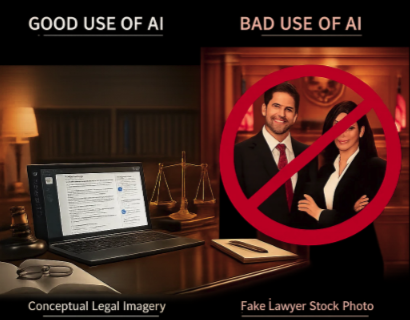
The use of this material could introduce meaningful risks that must be proactively managed. Misrepresentation is the most significant concern: stock-like AI images of “attorneys”, “clients”, “courtrooms”, or “accidents” can inadvertently imply false affiliations, depict inaccurate legal settings, or project diversity that does not reflect the firm’s actual staff. In some jurisdictions, bar advertising rules explicitly prohibit misleading or fabricated depictions of lawyers, results, or client experiences.
Additionally, certain AI tools generate content based on underlying training data that may raise copyright, consent, or likeness rights questions. The emerging regulatory environment around AI transparency, watermarking, and disclosure also requires close monitoring. Heavy reliance on AI imagery may diminish authenticity and erode audience confidence if not deployed thoughtfully.
Guiding Principles for Responsible Use
To leverage AI’s benefits while mitigating risks, law firms should adopt a cautious, policy driven approach:
Use AI for conceptual visuals, abstract designs, legal education, or supplemental storytelling
Avoid using AI-generated individuals (clients, lawyers, etc.) or real case scenarios.
Always validate the generated content complies with local bar advertising rules, avoids unauthorized likeness or copyrighted elements, and does not imply outcomes or expertise that would be considered misleading.
Maintain transparent internal documentation of how assets are created and ensure vendor platforms comply with relevant data, copyright, and ethical standards.
Include disclaimers or choose hybrid approaches (as needed) where AI supports but does not fully replace human curated content.
Prioritize brand authenticity and accuracy above all.
Photos and videos developed using AI tools represent a powerful creative resource for law firm marketing, offering speed, efficiency, and innovation. Yet, responsible adoptions require deliberate guardrails that protect the firm’s credibility, ensure compliance, and maintain alignment with professionalism.
The most effective path forward is a balanced one: embrace the capabilities of an advancing technology, but do so with intention, oversight, and a commitment to best practices.
