
Creative Is Compliance: Why Design Matters in Class Action Notice Campaigns
In class action notice, media strategy has traditionally carried the most weight. Reach, frequency, impressions, and publication plans are examined closely. However, creative execution is often treated as a necessary final step — important, but secondary.
We have always approached creative execution as inseparable from notice performance. The realities of today’s media environment only reinforce that position.
Creative execution goes far beyond attention-catching graphics. It directly affects comprehension, engagement, participation rates, cost efficiency, and defensibility. Media delivers notice into the marketplace. Creative shapes whether it is seen, trusted, and acted upon.
For administrators, this is about performance and compliance.
The Modern Attention Barrier
Class members do not experience notice plans as strategy documents. They encounter them as brief interruptions in crowded digital spaces — social feeds, streaming platforms, mobile browsers, inboxes, and search results.
In that environment, low-quality or generic creative can resemble spam, appear templated, bury essential information in dense legal copy, or fail to signal legitimacy.
In those cases, impressions may be delivered, but notice is not absorbed.
Across digital platforms, the same pattern appears again and again: audiences make credibility judgments within seconds. Communications that fail to establish relevance and credibility are quickly filtered out regardless of placement strategy.
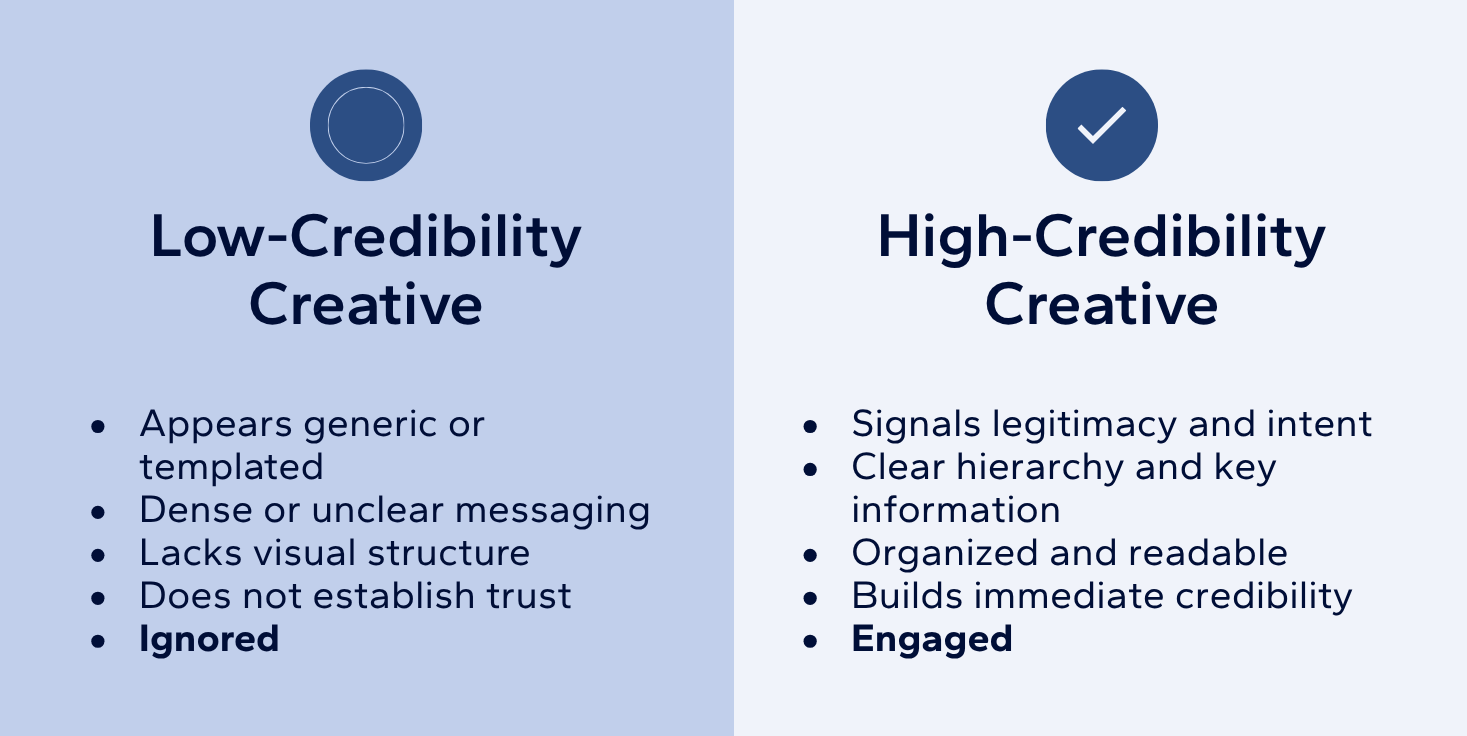
Distribution alone does not guarantee meaningful notice. Recognition and comprehension determine whether notice fulfills its purpose.
High-quality creative closes that gap.
Creative as a Due Process Support Mechanism
The standard remains “the best notice practicable under the circumstances.” Today, those circumstances include how people actually consume information.
Meaningful notice requires that class members:
Recognize the communication as legitimate.
Understand that it affects their rights.
Identify key deadlines and actions quickly.
Feel sufficient trust to engage.
Each of these outcomes depends in part on how the creative is executed.
Clear visual hierarchy prioritizes rights and deadlines. Plain-language headlines improve clarity. Professional design signals that the communication originates from a credible, court-authorized process. Accessibility best practices — including contrast, readability, captioning, and mobile optimization — expand inclusion.
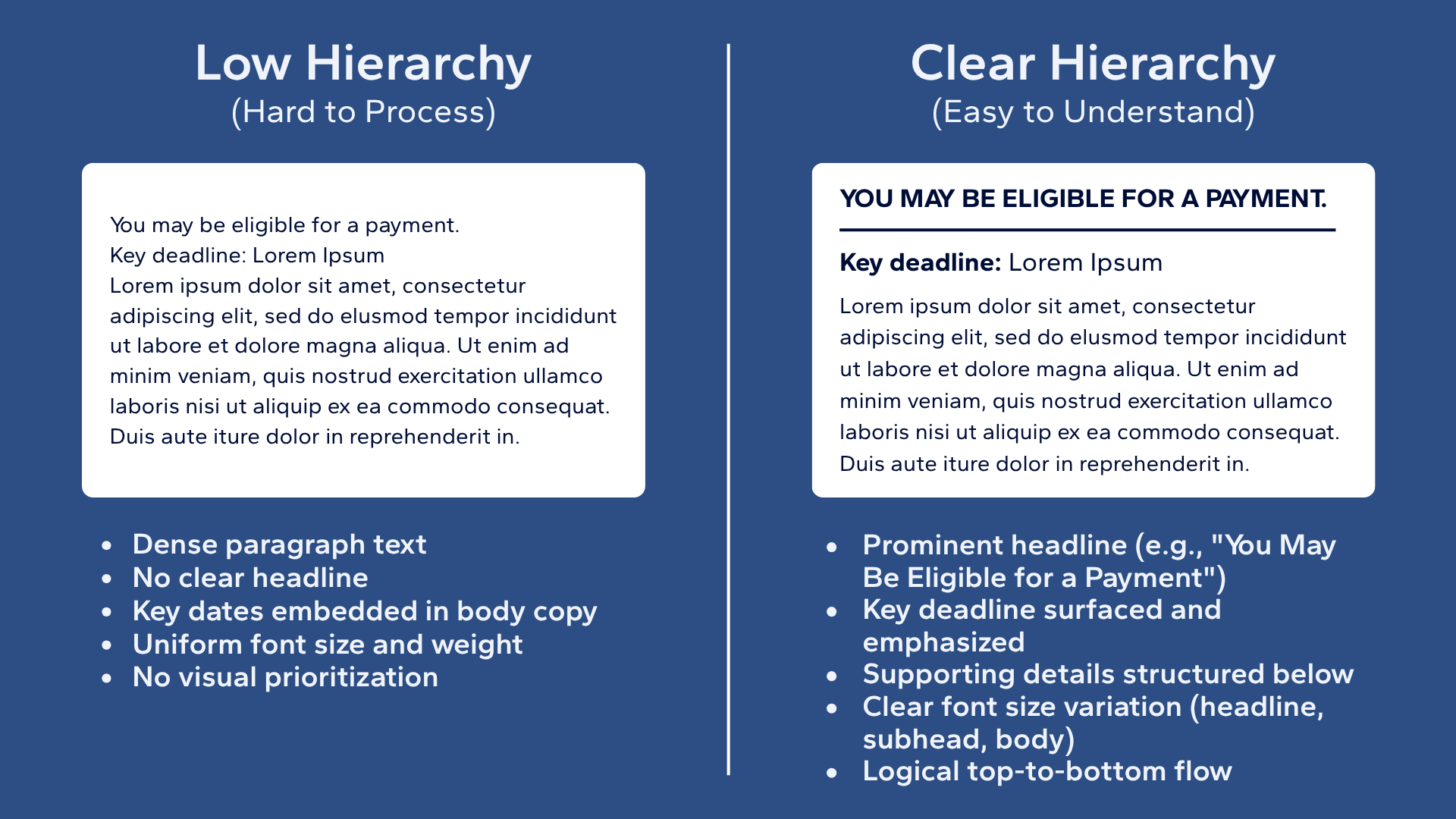
These choices influence whether notice is understood.
Treating creative development as part of how the notice plan functions strengthens the foundation supporting adequacy.
Creative as a Performance Multiplier
Administrators evaluate notice effectiveness through measurable outcomes aligned with the specific goals of the plan. Depending on whether the objective is broad awareness, claims participation, opt-out behavior, or another defined outcome, those metrics may include:
Click-through rate (CTR)
Unique reach
Viewable impressions
Landing page engagement
Claim completion
Cost per claimant
These represent only a portion of the available indicators. The appropriate measures vary based on the purpose and structure of the notice plan. What does not vary is the role creative plays in performance.
Media strategy determines where notice appears. Creative plays a central role in whether individuals engage once it does.
Creative performs better when it aligns with platform behavior and audience expectations. In many cases, stronger engagement also improves how efficiently platforms deliver and distribute notice. As a result, messages are processed more quickly, legitimacy is clearer, and class members are more likely to move from exposure to interaction — and from interaction to completion.
If creative fails to establish clarity and credibility quickly, engagement drops. Lower engagement typically requires greater frequency and increased media investment to reach comparable results.
Media and creative work together. Distribution creates opportunity; execution drives response.
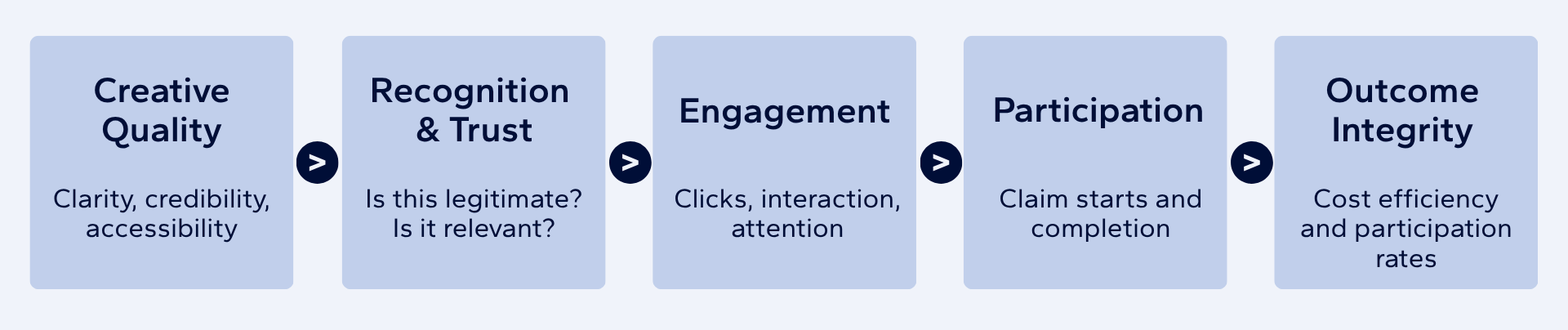
In settlements where participation levels influence outcome integrity, those differences matter. Creative quality affects measurable results, cost efficiency, and overall effectiveness.
The Trust Imperative in Notice Advertising
Digital skepticism is a defining characteristic of today’s media landscape. Class members are routinely exposed to phishing attempts, fraudulent settlement solicitations, and misleading advertising. Caution is a rational response.
Notice creative must establish legitimacy immediately.
Design elements that influence trust include:
Professional typography and layout
Clear identification of the administrator and case context
Consistent visual systems across formats and platforms
Direct, non-sensational language
Clear and secure calls to action
Notice assets that appear cluttered, inconsistent, or visually indistinguishable from low-trust advertising can trigger avoidance, even if the underlying information is accurate and court-approved.
Well-executed notice creative reinforces legitimacy — and that signal directly affects both engagement and participation. Those same signals that drive engagement also influence how notice is perceived under scrutiny.
Creative and Court Defensibility
Administrators must consider not only projected reach but also how notice efforts are structured to withstand scrutiny. Strategic notice design anticipates review.
When courts evaluate adequacy in notice, the inquiry may extend beyond placement to whether the notice was reasonably designed to inform class members of their rights. That evaluation includes clarity, accessibility, coherence, and whether the communication supports understanding.
Strategic creative development strengthens defensibility in several ways:
Documented Intentionality
Design decisions grounded in comprehension and accessibility objectives allow administrators to clearly articulate the rationale behind execution choices.
Enhanced Clarity
Structured visual hierarchy and plain-language messaging reduce ambiguity and support understanding of key rights and deadlines.
Cross-Channel Recognition
Consistent creative systems reinforce familiarity across exposures, increasing the likelihood that class members connect touchpoints to the same case.
Observable Engagement Indicators
Strong engagement and participation metrics provide practical evidence that notice was not merely delivered, but meaningfully received.
We build creative quality and strategic execution into notice planning from the outset — not as a final production step, but as a foundational element of an effective plan. The result has been notice programs that move through the approval process without adequacy challenges.
Defensibility is strongest when it is built in early. Strong creative execution strengthens sound media planning and reinforces the overall adequacy and credibility of the notice effort.
Moving Beyond “Good Enough”
Earlier media environments were more forgiving. Templated or compliance-only creative could perform adequately in less crowded conditions. Today’s digital environment is far less forgiving.
Audiences filter aggressively, and low-credibility signals are dismissed quickly — regardless of placement or frequency.
Creative treated as a production formality rather than a core component of notice design leads to lower engagement, higher costs, and increased scrutiny. Integrating performance-informed creative strategy from the outset is what keeps notice programs effective.
A Practical Framework for Communicating Creative Strategy
When documenting creative decisions for counsel or the court, grounding the rationale in adequacy and comprehension objectives strengthens the record:
“The visual structure was designed to prioritize key rights and deadlines.”
“Plain-language messaging was incorporated to enhance comprehension.”
“Assets were optimized for mobile viewing, reflecting documented user behavior.”
“Creative variations were evaluated to improve engagement efficiency.”
“Consistent design across channels strengthens recognition and trust.”
This framing keeps the focus on adequacy, clarity, and performance.
It demonstrates that creative decisions were deliberate, documented, and aligned with the standard of meaningful notice — not incidental to the plan, but integral to it.
The Path Forward
The way people consume information will continue to evolve, along with the barriers to meaningful engagement — constrained attention, persistent skepticism, and increasing competition for attention.
Creative execution is a core component of effective notice.
Applying the same rigor to creative development as to media planning and data analysis produces measurable results:
Improved participation outcomes
Greater cost efficiency
Stronger support for adequacy
Enhanced trust with class members
The underlying standard has not changed: notice must be designed to be understood and trusted.
Creative is woven into compliance and is essential to ensuring notice remains effective.

Alexander Stephens is the Client Director of Legal Notification Programs at Élan, where he serves as a strategic partner to some of the country's leading Class Action Administrators. He has directed more than 50 complex, multi-channel notice campaigns spanning digital, print, radio, and press across a broad range of class action and mass tort matters.
